

Scattering Ashes in Australia: Legal Rules, Regulations, and Creating Permanent Reflection Sites
Posted by Ted Argyle on 1st Nov 2026
Deciding what to do with a loved one's ashes is a deeply personal process. For many families in Australia, scattering ashes in a location that held special meaning—a favourite beach, a family farm, a quiet bushland trail, or a local garden—offers a sense of peace and closure.
However, navigating the practical and legal side of scattering ashes in Australia often brings up questions. Where are you legally allowed to scatter ashes? Do you need council permission? How do you handle scattering over water or in national parks?
Here is a straightforward guide to Australian rules and regulations, along with ideas for creating a lasting, permanent reflection site.
1. Legal Rules for Scattering Ashes in Australia
In Australia, ashes (cremated remains) are chemically inert and pose no public health or environmental risk. Because of this, Australian law is generally very accommodating, provided you act with respect, obtain necessary permissions, and avoid private property without consent.
Scattering on Private Property
-
Your Own Property: You can scatter ashes freely anywhere on land that you privately own.
-
Someone Else’s Land: You must obtain explicit permission from the landowner before scattering ashes on private property.
Scattering on Public Land & Local Council Parks
Most local councils across Australian states (such as Victoria, NSW, Queensland, and South Australia) allow the scattering of ashes in public parks, reserves, and coastal foreshores without formal permits.
However, you should always observe basic etiquette:
-
Check Local Bylaws: A quick call or website check with the local council is recommended, as some heritage gardens or high-traffic botanical gardens have specific restrictions.
-
Be Mindful of Others: Choose a quiet time of day (early morning or late afternoon) to avoid disturbing other park visitors.
-
Disperse Evenly: Disperse the ashes close to the ground, allowing them to blend naturally into the soil or turf.
Scattering in Australian National Parks
National parks are managed by state environmental authorities (such as Parks Victoria or NSW National Parks and Wildlife Service).
-
Scattering is generally permitted in most national parks as long as you stay on designated tracks and stay clear of sensitive ecological areas or waterways.
-
Contact the local park ranger office ahead of time to confirm any specific conditions for that park.
Scattering at Sea or in Waterways
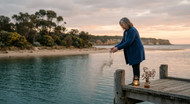
Scattering ashes off the Australian coast, off a boat, or into a river is a popular and meaningful choice.
-
Maritime Regulations: You do not require a special permit to scatter ashes in Australian ocean waters.
-
Boat Operators: If hiring a charter vessel or ferry service, inform the skipper beforehand. They will guide you to calm, safe waters and assist with positioning the boat relative to the wind.
-
Biodegradable Vessels: If placing flowers or containers in the water alongside the ashes, ensure they are 100% natural and biodegradable (avoid plastics, floral foam, or synthetic ribbons).
2. Practical Tips for the Day
-
Check the Wind Direction: Always stand upwind (with the wind blowing behind your back) before releasing ashes to prevent them from blowing back toward you or family members.
-
Keep It Close to the Ground: Hold the container low to the earth or water surface to keep the wind from carrying the ashes away too quickly.
-
Consider Weather Conditions: On very windy days, it can be helpful to mix the ashes with a small amount of soil or sand, or use a specialized scattering tube designed for controlled release.
3. Creating a Permanent Reflection Site Back Home
One challenge many families experience after scattering ashes at sea, in a national park, or over a remote location is having a physical place to visit on anniversaries, birthdays, or quiet moments of remembrance.
Once ashes are scattered, the physical location remains unchanged, but having a dedicated marker back home in your domestic garden or indoor space provides a tangible anchor for your grief and memories.
Ways to Create a Dedicated Space:
-
A Dedicated Garden Bench or Tree: Placing a custom marine-grade plaque near a shade tree, quiet garden nook, or outdoor bench creates a permanent space to sit and reflect.
-
A Memorial Stone Keepsake: A natural slate stone placed indoors on a bookshelf, desk, or memory table allows you to keep a visual photo and personalized tribute close by.
-
A Living Memory Corner: Planting a flowering native shrub or tree in your home garden, marked with a small personalized token, gives your family a living memorial that grows over time.
Final Thoughts
Whether you choose to scatter ashes in the ocean, across a mountain range, or keep a small portion close in a memorial piece, the right choice is simply the one that honors your loved one’s journey and brings your family comfort.